

✓ Verified on September 3, 2026⏱ 4 min read✓ done
Anthropic — the company behind Claude
Before mastering the tool, understand who built it and why. Anthropic is a company founded on conviction, structured as a public benefit corporation, valued at nearly $1 trillion ($965B, May 2026) — making it the most valuable AI startup in the world.
The essentials in three points
1. Anthropic is a public benefit corporation founded in 2021 by former OpenAI researchers, with safety as its stated mission.
2. Its alignment method, Constitutional AI, gives the model an explicit text of principles against which it evaluates its own answers.
3. Its models are called Haiku, Sonnet, Opus and, at the top, Fable: the rule for choosing is in module 02.
2. Its alignment method, Constitutional AI, gives the model an explicit text of principles against which it evaluates its own answers.
3. Its models are called Haiku, Sonnet, Opus and, at the top, Fable: the rule for choosing is in module 02.
📜 Going further: the founders and the timeline (click to expand)
The founders
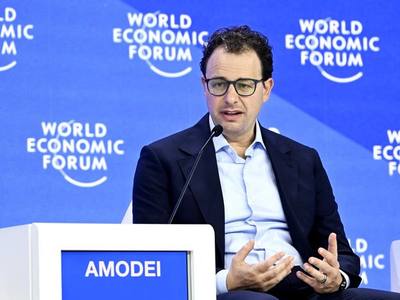
Dario Amodei
CEO & Co-founder
Born 1983, San Francisco. Stanford, then a PhD in physics at Princeton. Google Brain with Andrew Ng. VP of Research at OpenAI (2016–2020). Co-author of "Concrete Problems in AI Safety." Left OpenAI in late 2020 amid strategic disagreements.

Daniela Amodei
President & Co-founder
Born 1987. English literature at UC Santa Cruz. Politics in Washington, D.C. First employee at Stripe (2013). VP of Safety & Policy at OpenAI (2018). Leads governance, operations, and partnerships at Anthropic.
Seven co-founders round out the team: Jared Kaplan (Chief Scientist), Sam McCandlish (Chief Architect), Tom Brown (co-author of GPT-3), Chris Olah (interpretability), Jack Clark, Ben Mann, and Amanda Askell (philosopher).
Key timeline
Jan. 2021
Founded. $124M raised (Tallinn, Moskovitz, Schmidt).
Dec. 2022
Publication of Constitutional AI.
March 2023
Launch of Claude 1.
Sept. 2023
Amazon $4B + Google $2B.
March 2024
Claude 3 (Haiku, Sonnet, Opus).
March 2025
Series E $3.5B. Valuation $61.5B.
Jan. 2026
Cowork in research preview (public trial version).
Feb. 2026
Opus 4.6 (1M tokens) + Sonnet 4.6. Valuation $380B. Super Bowl ad and a public commitment: never any advertising inside Claude.
March 2026
Computer Use, Dispatch, Marketplace plugins, Excel/PPT v2.
May 2026
Opus 4.8 (fast mode, dynamic workflows). Series H: $65B raised, valuation $965B (≈ $1 trillion), run-rate ~$47B — the most valuable AI startup in the world. 6th European office (Milan), after Paris and Munich.
June 2026
Claude Fable 5 — the first Mythos-class model opened to the general public. Outperforms Opus 4.8 on nearly every benchmark (the industry's standard tests). Released alongside Mythos 5 (restricted access, cyberdefense). (Regulatory aside: access suspended worldwide from June 12 to 30, 2026, under a U.S. government export directive — a reported jailbreak — then restored for everyone on July 1, 2026.) On June 30, Sonnet 5 succeeds Sonnet 4.6: close to Opus 4.8, at Sonnet pricing — the new default model.
July 2026
Cowork moves to web and mobile (cloud sessions that keep running with your machine turned off). Fable 5 restored. Vertical push: Claude Science (June 30) and Claude for Teachers join Claude for Healthcare (January). On the 24th, Opus 5: frontier intelligence at half the price of Fable 5, the new default on Max.
August 2026
Text watermark announced (August 11): upcoming models will invisibly mark every text they produce (AI Act). Claude Security moves onto Mythos 5 (August 21). Claude in Chrome reaches general availability and memory is unified across chat and Cowork (August 25-26). Model Hardware Standard (August 27): Claude operates physical instruments through an MCP-compatible standard.
Sept. 2026
Fable 5.1 and Mythos 5.1 (September 1): the new quality ceiling, at the same price but with cache reads 4× cheaper (−25 to −45% on agentic workloads), finer-grained guardrails, and the first text watermark in production. Sonnet 5 keeps its $2 / $10 pricing: the planned increase is cancelled.
🛠️ Your turn — 5 minutes
Read the essentials above. If the topic interests you, expand the timeline.
Expected result : You can explain in one sentence what Anthropic is and what sets Claude apart.
🧪 Exercise — Test what you've learned
What is the fundamental difference between Anthropic's Constitutional AI and OpenAI's RLHF?
A. Constitutional AI uses more training data
B. Claude reasons about a built-in ethical constitution, instead of simply voting on preferences
C. Constitutional AI is a stricter censorship filter